

You close the month. Then the arguments start.
Variance analysis that stops at the gap
A plan and actuals that cannot agree on the maths
Every miss becomes finance's chase
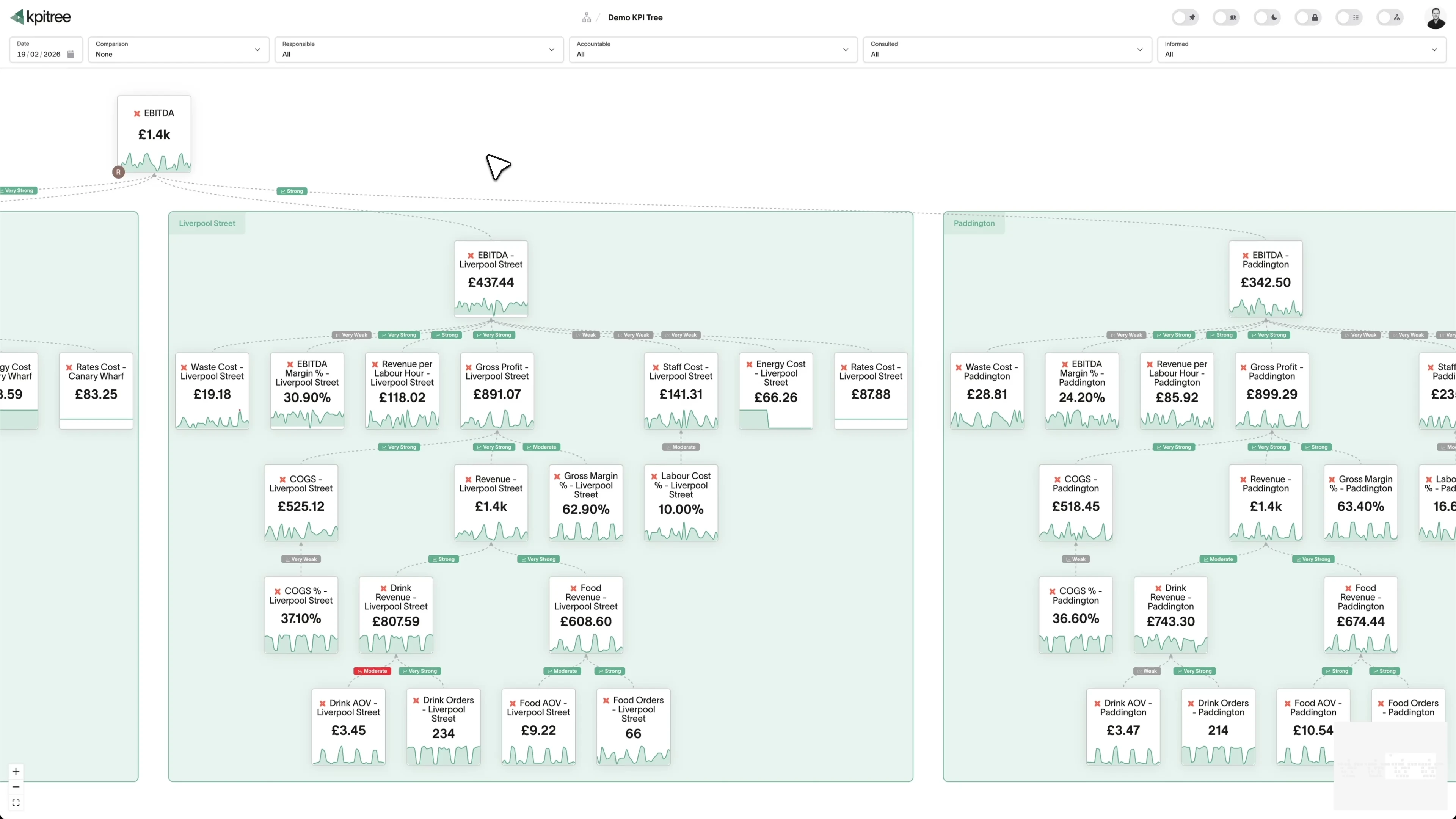
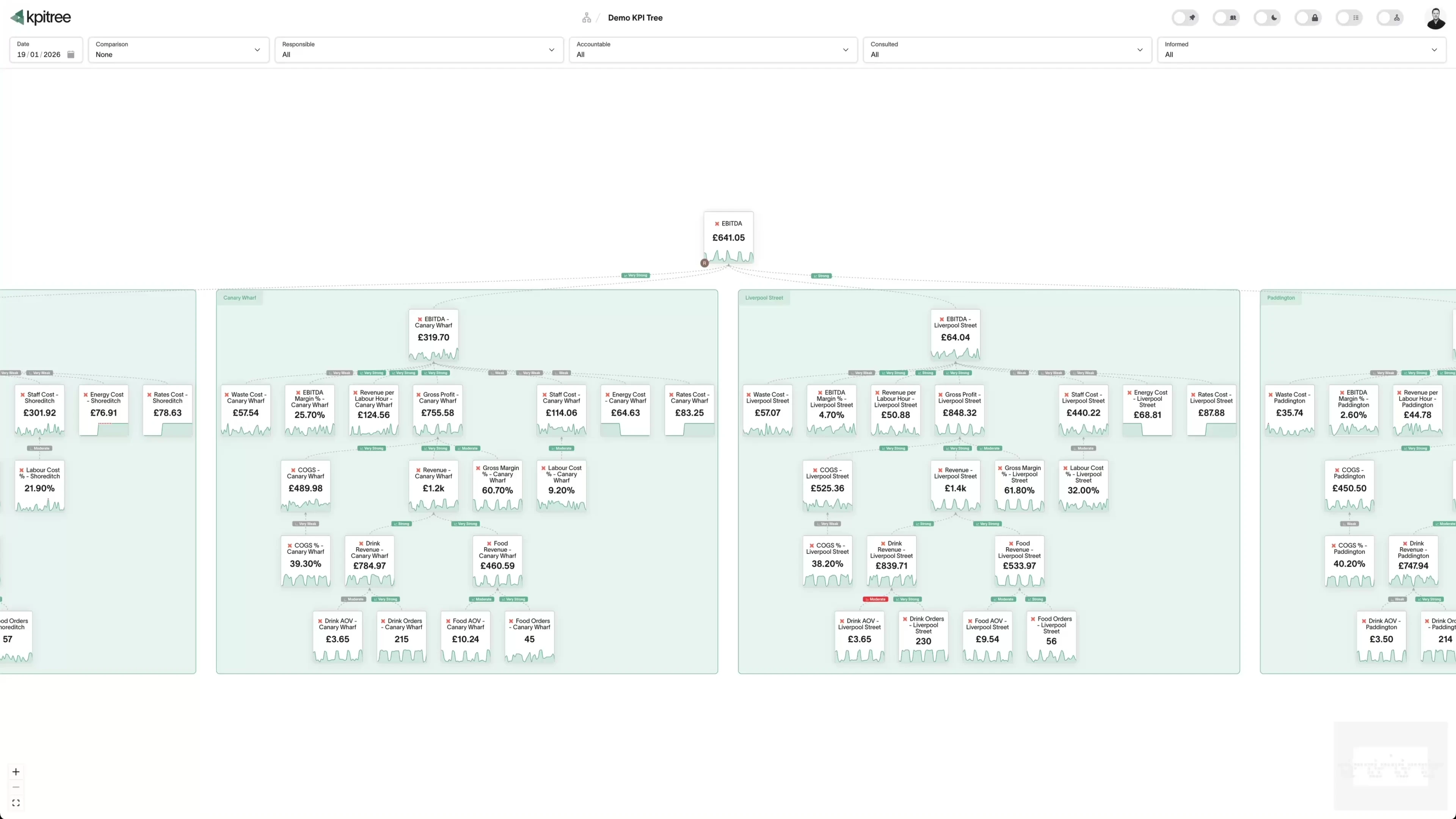
Decompose your P&L into a causal model
- Map every P&L line to the operational drivers beneath it, across sales, marketing, product and operations
- See a confidence level and statistical significance on every driver relationship, recalculated nightly as new periods land
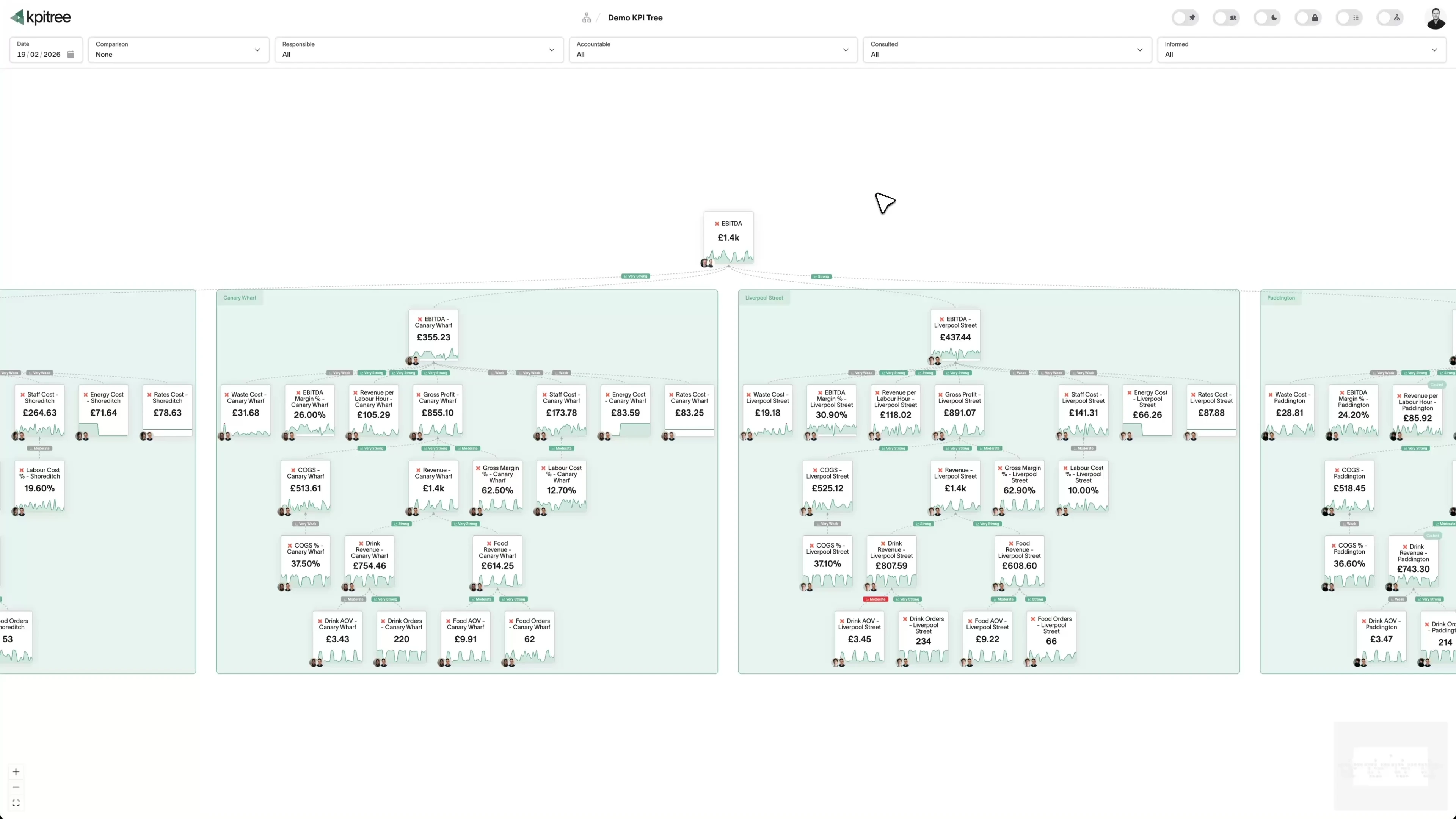
- Drill from a board-level variance to the team and activity that caused it
- Metrics stay current automatically, synced from your warehouse and semantic layer
Run the plan through the same pipeline as the actuals
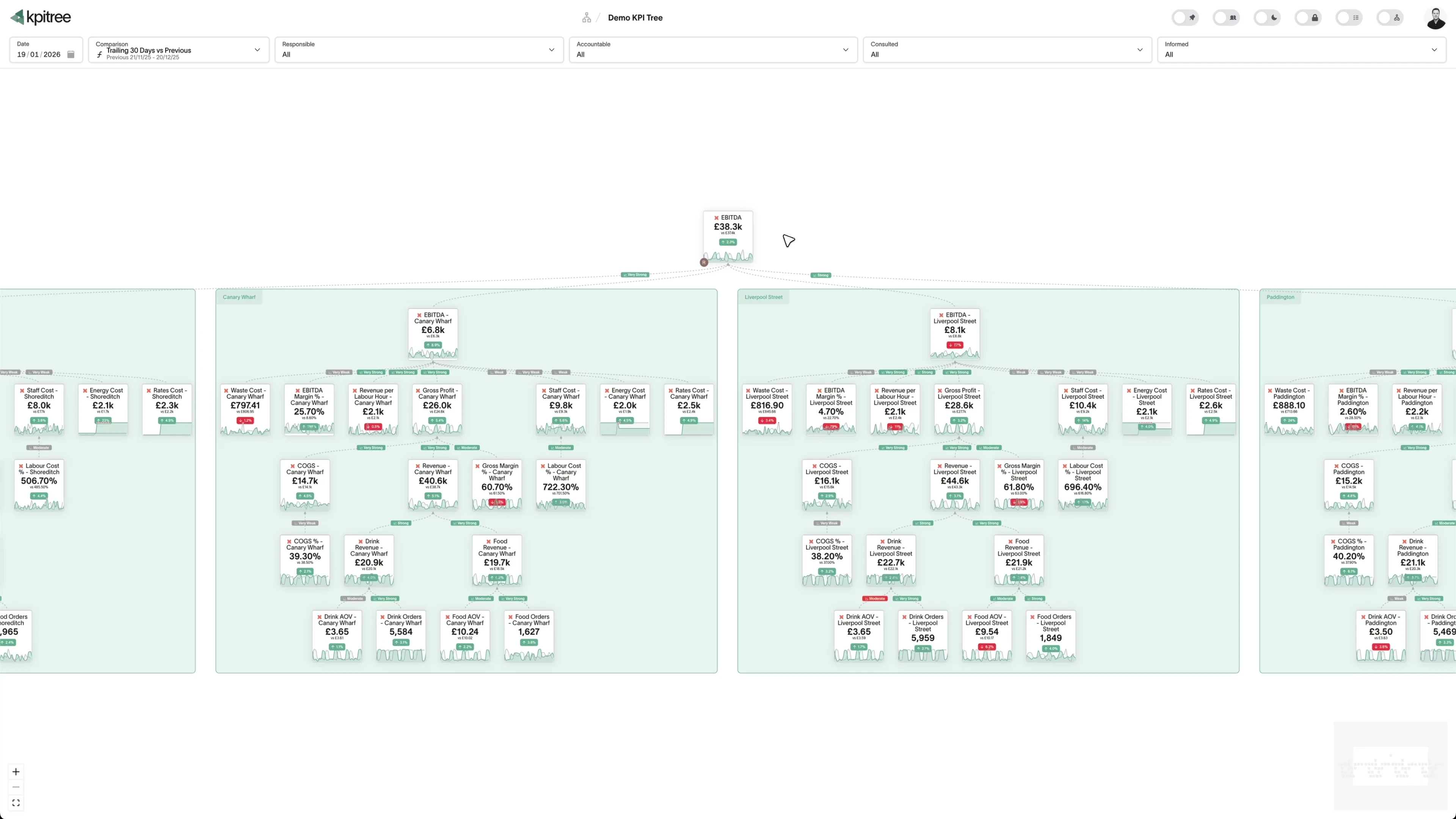
- Compare plan against actuals directly on the canvas, at any date, granularity or comparison period
- Model ramp profiles for new initiatives, so growth follows a realistic adoption curve rather than a flat assumption from day one
- Switch to the grid view when you want rows and columns, a familiar spreadsheet layout with the comparison at every date
- One calculation pipeline computes both plan and actuals, so no meeting opens with whose number is right
Break any variance into the drivers that caused it
- Waterfall charts show what each driver added to or took away from the variance
- Trace a miss through every level of the tree to the input that moved, not just one hop
- Driver contributions carry confidence levels and statistical significance, so you can say how sure the model is
- Distinguish an isolated blip from a systemic shift building across several levels of the tree
Close the period and the misses route themselves
- Period-close triggers fire when a metric misses its target and notify the named Accountable owner, not a channel
- Approvals are first-class workflow steps, so the next action only runs once the named reviewer signs off
- Escalation moves up the live org chart automatically when nobody acts
- Actions are tracked against the metric they were meant to move, and the impact is verified rather than self-reported
“Your FP&A tool holds the plan. Your BI tool reports the actuals. Neither can break the variance into drivers, put a named owner on the miss, or prove the fix worked.”
Beyond variance reporting
Causality with the workings shown
One pipeline for plan and actuals
Misses that route themselves
Common questions
How does this connect to our existing financial data?
KPI Tree connects to Snowflake, BigQuery, Databricks, Redshift, Azure SQL and PostgreSQL, and syncs metric definitions from dbt, Looker and Snowflake Semantic Views. Google Sheets covers the numbers that live outside the warehouse, and any MCP-compatible tool, such as Stripe or HubSpot, can feed metrics too. Metrics are calculated where the data lives, so the numbers always match your warehouse.
Is this a replacement for our BI or FP&A tools?
No. Your BI tool stays for dashboards and ad hoc queries, and you can keep building budgets wherever you build them today. KPI Tree adds the layer neither provides: a causal model of what drives each P&L line, your plan and actuals computed by one pipeline, a named owner on every metric, and verification that the actions taken actually moved the numbers.
How do budgets and forecasts get into KPI Tree?
Through business models. A business model holds budgets, forecasts and targets alongside your actual metric values, aggregated in exactly the same way, so you can compare plan against reality across any time period, granularity or comparison directly on the canvas. Each metric can carry its own ramp profile, so a new initiative follows a realistic adoption curve rather than a flat line from day one.
What happens when a metric misses its target at period close?
A trigger fires at the end of the period, with a tolerance you set for how far the metric can slip, and notifies the named Accountable owner through Slack or email with the driver context attached. If nothing happens, escalation follows your live org chart to their manager. Every run is recorded, so you can see the exact path each miss took from trigger to action.
Can we see whether the money we spent actually moved the numbers?
Yes. Initiatives carry a budget, actual spend, an owner and milestones, and link to the metrics they are meant to move. The Portfolio view reads across all of them, scoring each initiative by how far its target metrics have moved since the work began, in the direction it intended. Because execution is tracked separately from outcome, you can see immediately where money was spent, work was delivered and the number still did not move.
Can we model different P&L structures for different business units?
Yes. You can build separate metric trees for different business units, geographies or product lines. Each tree has its own structure, owners and targets while rolling up to a consolidated view. The model adapts to how your business is actually organised.
Related guides

Metric trees for finance teams
From DuPont analysis to modern decomposition
How to set KPI targets
A data-driven approach to target setting
How to run a quarterly business review that changes what happens next
Most QBRs are backward-looking slide decks. The best ones are forward-looking decision sessions.
See your plan and your actuals in one causal model
Book a demo and we will map your P&L as a metric tree. You will see budgets and actuals computed by one pipeline, a variance broken into driver contributions on a waterfall chart, and a period-close miss routed to the named Accountable owner with the drivers attached.










